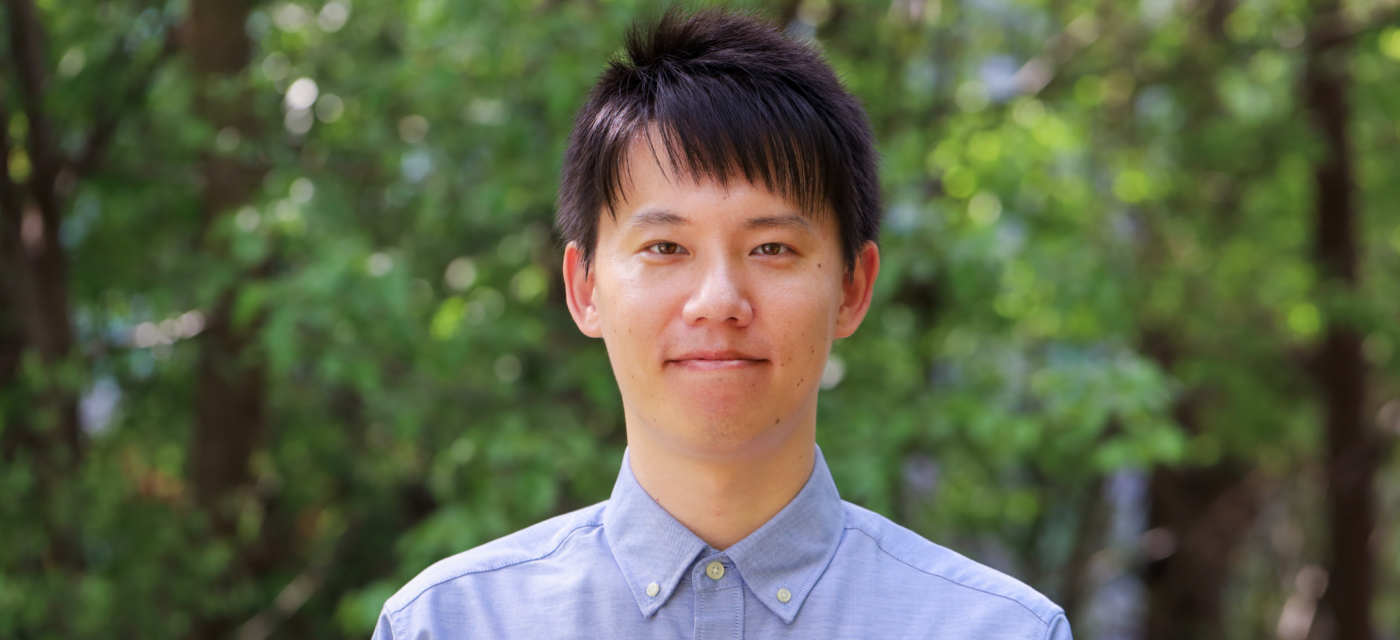
Professor Kosuke Namekata is an observational astronomer at Kyoto University and NASA’s Goddard Space Flight Center and early member of the Mauve Science Programme. In this spotlight, he explores how studying flares from Sun-like stars can help us understand what conditions were like on early Earth.
Can you please introduce yourself?
“I am an observational astronomer studying magnetic activity on the Sun and low-mass stars, particularly powerful flares and coronal mass ejections (CMEs). My main targets are young Sun-like stars, which rotate rapidly and produce much more energetic flares than the present-day Sun. By observing them, we can investigate what the Sun and the space environment around the young Earth may have been like several billion years ago. I combine optical, ultraviolet, X-ray, and radio observations from both ground-based telescopes and space observatories.
I am a Project-Specific Assistant Professor at Kyoto University and am currently conducting research at NASA’s Goddard Space Flight Center as a JSPS Overseas Research Fellow. My broader goal is to connect detailed solar physics with observations of distant stars and ultimately understand stellar “space weather” and its impact on planets.”
What inspired you to pursue research in your field?
“My first fascination with astronomy came from spectacular phenomena visible in Earth’s sky, particularly the beauty of aurorae. In a university lecture, I learned that aurorae are manifestations of activity on the Sun. I was amazed that events occurring in space could produce such vivid displays on Earth. I was equally fascinated to learn that aurorae have been recorded by civilizations around the world for more than a thousand years, meaning that solar activity is also written into human history.
I later travelled to Yellowknife, Canada, to see the aurora for myself. The dynamic curtains of light, together with the immense solar activity behind them, made a profound impression on me. This experience led me to study explosive events on the Sun—solar flares—and eventually to ask how similar events on other stars might affect exoplanets and perhaps even extraterrestrial life.”
Mauve will observe flares across ultraviolet and visible wavelengths as they evolve. […] Ultimately, we hope to better understand the environment around young stars and what conditions may have been like for the early Earth and for young exoplanets.
Professor Kosuke Namekata
How does your involvement in Mauve align with your research interests?
“Mauve aligns closely with my interest in the time-domain behaviour of active stars. Ultraviolet radiation is a major component of flare energy and can strongly influence planetary atmospheres, yet long-duration ultraviolet observations of stars remain rare.
By combining ultraviolet and optical spectroscopy with repeated, long-term monitoring, Mauve will allow us to measure how often ultraviolet flares occur, how their spectra evolve, and how much energy they release. It will provide the missing link between classical flare observations and the radiation environments of young stars and their planets.”
Could you describe the science theme you are working on with Mauve?
“I am leading a science theme focused on understanding how powerful flares produce ultraviolet and visible light on young Sun-like stars and M-dwarfs. These stars are much more active than the present-day Sun, and their flares may strongly affect the atmospheres of nearby planets. However, we still do not fully understand how flares are produced or how much ultraviolet energy is released.
Mauve will observe flares across ultraviolet and visible wavelengths as they evolve. This will help us test the assumptions commonly used to estimate flare energies and build more realistic models of their radiation. Ultimately, we hope to better understand the environment around young stars and what conditions may have been like for the early Earth and for young exoplanets.”
What aspect of Mauve are you particularly excited for?
“I am especially excited to be involved in the development of a small space mission and to follow the process from scientific planning and instrument preparation to launch, calibration, and observations. Opportunities to see how a mission is built and operated are rare, particularly for early-career researchers, and I believe this experience is extremely valuable for training the next generation of astronomers, like me.
I am also excited by Mauve’s flexibility. Because the science programme is closely connected to the community, researchers can propose new ideas, adjust observing strategies, and test concepts more easily than is often possible with larger missions. The opportunity to turn an idea into an actual observation is both scientifically valuable and personally very rewarding.”
What synergies do you see between Mauve and other ground-based/space-based telescopes?
“Mauve will be highly complementary to observations at other wavelengths. We are particularly interested in coordinating Mauve with Japan’s 3.8-m Seimei Telescope, which can extend the wavelength coverage into the infrared, as well as with X-ray and far-ultraviolet observatories. Such simultaneous observations would allow us to study different layers and temperatures of a flare together and build a much more complete picture of the event. Mauve’s flexibility in scheduling observations would make these coordinated campaigns especially powerful, allowing us to respond to scientific opportunities and test new observational ideas.”
How has your experience been working with the Mauve Science Collaboration?
“My experience with the Mauve Science Collaboration has been enjoyable. Before the launch, we also had an in-person meeting, which was a good opportunity to discuss our plans directly and meet other members of the collaboration. We later watched the satellite launch. I do not usually follow spacecraft launches very closely, so seeing the launch as part of the team was a new and enjoyable experience.”