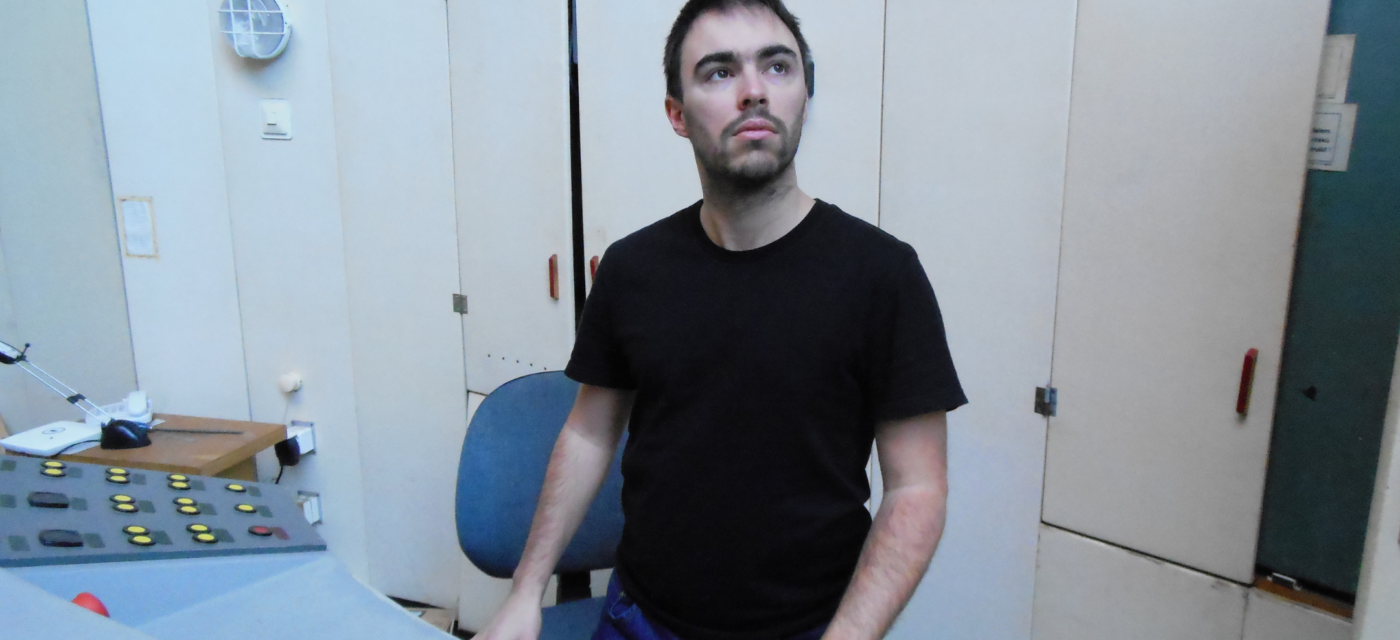
Dr Krisztián Vida of Konkoly Observatory is a member of the Mauve Science Programme along with Balint Seli and Blanka Schmercz. His work focuses on the magnetic activity and variability of cool stars, using high-precision photometric datasets to study stellar flares, spots, and activity cycles. In this member spotlight, Dr Vida talks about his research and how Mauve fits into it.
Can you please introduce yourself?
“I am an astronomer at Konkoly Observatory, where my main research field is stellar activity–the wide range of phenomena connected to magnetic fields in stars. This includes starspots, activity cycles, stellar flares, and coronal mass ejections (CMEs), which can strongly influence the environments of surrounding planets. In many ways, I study how “space weather” works around other stars. I work with both ground-based telescopes and space observatories such as Kepler, TESS, and PLATO. I am also involved in ESA’s ARIEL and PLATO missions, mainly contributing to stellar activity studies, fast photometry, and flare detection using machine learning methods.”
What inspired you to pursue research in your field?
“I have always been fascinated by astronomy from an early age–one of my first memories from kindergarten is being captivated by a book filled with pictures of the Moon landing and the stars. I have always been interested in how dynamic stars really are. Magnetic fields can produce huge flares and coronal mass ejections that release enormous amounts of energy and can completely (re)shape the environments of nearby planets. Understanding stellar activity is not only about stars themselves: it also tells us whether planets around them can maintain atmospheres or potentially support life.”
I appreciate that the scientific direction is strongly community-driven. Researchers help shape the observing strategy and define the science priorities, which makes the collaboration feel genuinely active rather than top-down, and given the relatively small size of the collaboration, this can create good dynamics.
Dr Krisztián Vida
How does your involvement in Mauve align with your research interests?
“Mauve is a natural extension of our research: one of the satellite’s main focus is on stellar magnetic activity, and their ultraviolet signatures. My work has long centered on understanding how active stars behave over time, and UV observations are one of the most powerful tools for studying these processes. From the ground, we cannot observe much of the ultraviolet spectrum because Earth’s atmosphere blocks it, so space missions like Mauve open a completely new window. Its long-duration monitoring is also especially valuable for time-domain astronomy, where catching transient events like flares is crucial.”
Could you describe the science theme you are working on with Mauve?
“Our focus within Mauve are flare stars – these can produce extremely energetic outbursts that emit large amounts of ultraviolet radiation, sometimes far stronger relative to the star than what we see from our own Sun. With Mauve’s UV-visible spectrophotometry, we can study a sample of active stars to study the properties of their upper atmospheres and monitor how flares evolve in time and better understand the physical processes behind them. This is important because such events can significantly affect orbiting planets, influencing atmospheric erosion and habitability. Mauve helps us study these effects with continuous observations that were previously very difficult to obtain.”
What aspect of Mauve are you particularly excited for?
“What excites me most is the opportunity for continuous, long-baseline ultraviolet monitoring. Stellar flares are unpredictable–you cannot simply schedule them like a laboratory experiment. Many major observatories are oversubscribed, and UV observations are still relatively rare. Mauve provides thousands of observing hours each year and makes long-term monitoring realistic for several targets. That means we can move beyond isolated snapshots and start studying how stellar activity evolves over time.”
What synergies do you see between Mauve and other ground-based/space-based telescopes?
“Mauve works best when combined with other facilities because stellar activity is truly a multi-wavelength problem. UV observations tell us about the hottest and most energetic layers of stellar atmospheres, but to fully understand these events, we also need other observations as well. We can obtain ground-based photometry to support Mauve’s observations, but Mauve can provide important support for the most important targets of larger space missions like PLATO or Cheops.”
How has your experience been working with the Mauve Science Collaboration?
“I appreciate that the scientific direction is strongly community-driven. Researchers help shape the observing strategy and define the science priorities, which makes the collaboration feel genuinely active rather than top-down, and given the relatively small size of the collaboration, this can create good dynamics. There is plenty of overlap in the scientific topics and interests in the science team, but this provides strong opportunities for collaboration rather than creating competition. For a time-domain mission like Mauve, that flexibility is extremely important, and it makes the collaboration both productive and genuinely enjoyable to be part of.”